
01
What the PPWR asks, and when.
The EU Packaging and Packaging Waste Regulation (EU) 2025/40 sets reuse targets for transport packaging in Article 29. Four dates matter.
- 1Since 12 August 2026
Reusable packaging must be part of a reuse system.
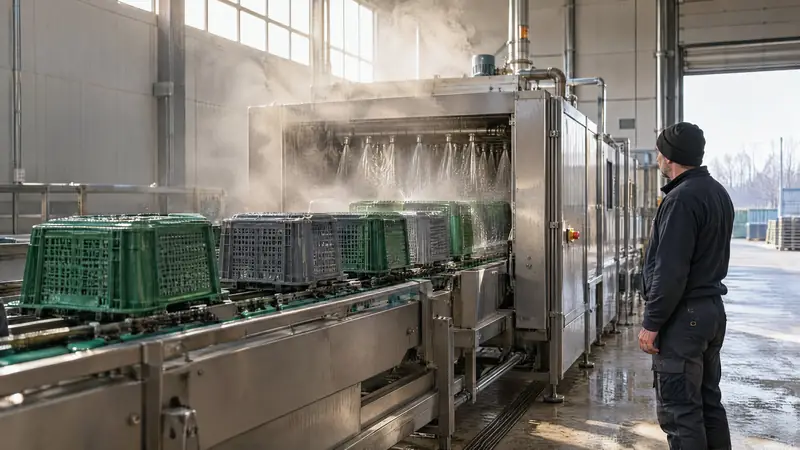
If you place reusable packaging on the market, you must take part in a reuse system that covers reverse logistics, collection, cleaning and reconditioning, inspection and redistribution. This covers open and closed loops.
Art. 27, Annex VI Part A - 230 June 2027
The calculation rules are due.
Article 30 counts the reuse share per calendar year. The method comes in an implementing act that the Commission lists for this date, so nobody can give you a final formula today.
Art. 30, pending - 3From 1 January 2030
40% reusable, and 100% on some routes.
At least 40% of your pallets, boxes, trays, plastic crates, IBCs, pails, drums and canisters must be reusable packaging within a reuse system. Between your own sites, linked or partner enterprises, and operators in the same Member State, it is 100%.
Art. 29(1), (2), (3) - 4By 2040
An aim of 70%.
The Regulation asks operators to endeavour to reach 70%. It is an aim, not a binding target.
Art. 29(1), aim
All four dates rest on the same records: reusable units per format, where they are and how many trips they make in a year.
02
Four ways to count trips.
A reuse share is built from reusable units and their trips. Article 12 adds a QR code or another open digital data carrier on reusable packaging, from 2029 at the earliest. Most companies combine two methods.
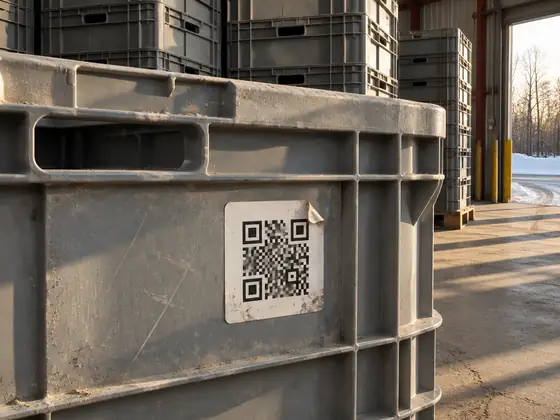
Barcode or QR label
Cost per item: lowest- What it tells you
- Where it was last scanned, and by whom
- What you need
- Phones or scanners at each handover
- Best for
- Exchanges and balances between partners
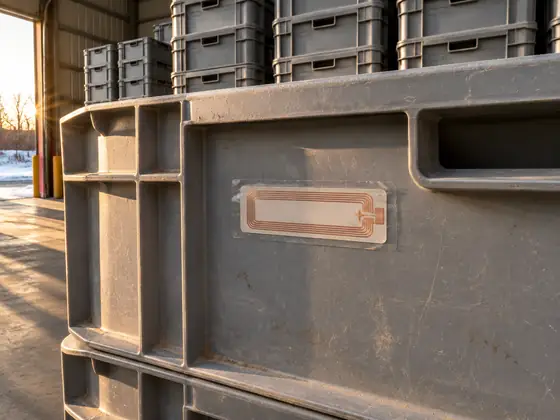
RFID tag (UHF)
Cost per item: low per tag, readers cost more- What it tells you
- That it passed a dock door or gate, with no manual scan
- What you need
- Readers at doors and gates
- Best for
- High volumes through fixed dock doors
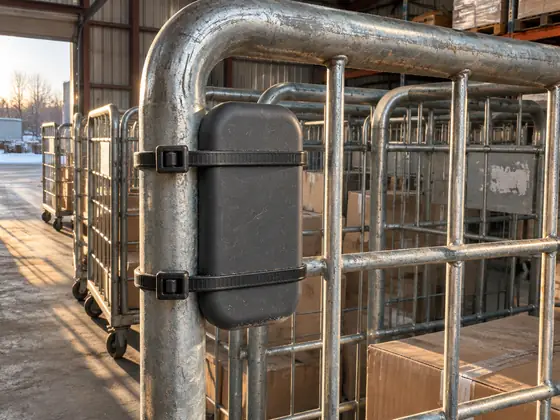
Bluetooth tag (BLE)
Cost per item: medium- What it tells you
- Which site or zone it is in now
- What you need
- Phones or gateways nearby
- Best for
- Pools and yards that need presence, not only handovers
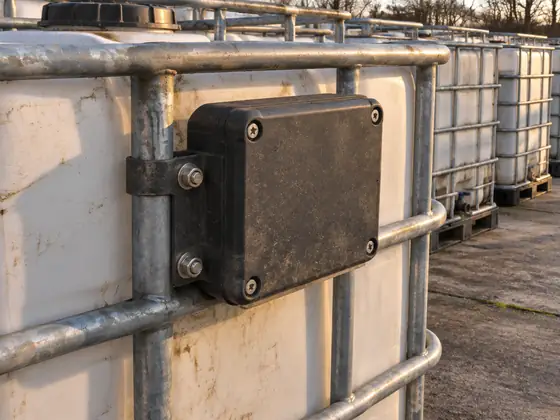
GPS or LTE tracker
Cost per item: highest- What it tells you
- Its position anywhere, live
- What you need
- Nothing on site, a battery to charge
- Best for
- High-value loads, theft and dwell time
Costs are relative. Ask every vendor for the full cost per item, readers and gateways included, not only the tag.
03
What PPWR-ready software records.
The calculation method is still pending, so keep the raw records. Each line is something you can test in a demo.
 ReuseHandovers4PartnersLiveNot back50
- FormatUnitsTripsNot back
- Plastic crates1200960038
- Pallets800410012
- IBCs1506100
38 plastic crates have not come back from Market Lier.
They drop out of this year's reuse count- 01Counts reusable units per format.Pallets, crates, IBCs and drums in circulation, per calendar year.
- 02Counts trips per item.Every scan adds a trip, so the reuse rate comes from records and not from an estimate.
- 03Shows flows per site and partner.Own sites, partner enterprises and domestic customers apart, so you see which routes fall under the 100% rule.
- 04Records each step of the reuse system.Collection, cleaning, inspection and redistribution with date, place and partner.
- 05Keeps a balance per partner.Who holds how many of your items today, so units that stop coming back show up.
- 06Exports the evidence.Units, trips and reuse rates per format and year, in a file a customer or auditor can read.
04 Rotion
Written by Rotion.
Rotion is software for reusable packaging: pallets, crates, IBCs and roll cages. It records handovers, balances per partner, trips per item and reuse rates, so you are PPWR-ready. We wrote this guide to be useful whichever tool you choose.
05
Questions about the PPWR reuse targets.
What are the PPWR reuse targets for transport packaging?
From 1 January 2030, at least 40% of the transport packaging you use in the listed formats must be reusable packaging within a reuse system, with an aim of 70% by 2040. This is Article 29(1) of Regulation (EU) 2025/40.
When does the 100% rule apply?
From 1 January 2030, 100% applies when you move products between your own sites or between linked or partner enterprises anywhere in the EU, and between operators within the same Member State (Article 29(2) and (3)). Pallet wrappings and straps are exempt from the 100% rule.
Which packaging is excluded from the targets?
The targets do not apply to packaging for dangerous goods, packaging custom-designed for large machinery, equipment and commodities, flexible formats in direct contact with food and feed, and cardboard boxes (Article 29(4)).
How is the reuse share calculated?
Article 30 sets the calculation per calendar year. The method comes in an implementing act that the Commission lists for 30 June 2027, so it is not final yet.
Is there a minimum number of rotations?
Not yet. A Commission delegated act will set the minimum number of rotations per packaging type. Until it is published, no legal minimum exists.
Does the PPWR require a Digital Product Passport for packaging?
No. Article 12 asks for a label and a QR code or another open digital data carrier on reusable packaging, from 2029 at the earliest. Digital Product Passports come from a different regulation, the ESPR.
